Posted on August 6, 2021 by Yoram Gat
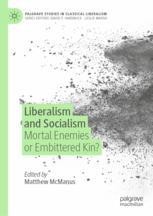 Victor Bruzzone is a doctoral student at the University of Toronto. In a segment on a podcast he makes an argument for a selecting the legislative chamber of government by sortition (starting about 1 hour into the recording). The segment mentions a chapter Bruzzone wrote in a soon-to-be-published book, Liberalism and Socialism: Mortal Enemies or Embittered Kin?, which presumably argues for the same idea.
Filed under: Academia, Books, Elections, Press, Sortition | Leave a comment »
Posted on July 31, 2021 by Yoram Gat
 Frank Escoubès and Gilles Proriol are the authors of the book “La démocratie, autrement – L’art de gouverner avec le citoyen” (Democracy, differently: The art of governing with the citizens). In an article in L’ADN they describe the thesis of their book.
There is no doubt that our representative democracy is in trouble. Humiliated, attacked, sometimes rejected: what is going to be its fate in the period between now and the presidential elections of 2022?
The citizens do not feel represented anymore
This is hardly news – our democracy is flawed. The elected are supposed to create the most faithful, the most accurate representation of the citizens, that which a technocracy cannot achieve. The coronavirus crisis has sunk the nail, in silencing the citizens like never before. In the face of that, populism and demagoguery are rising, claiming that they will provide ways for the people to decide everything, all the time, by themselves. Denial the complexity of reality, political irrealism, ideological naivety. In this context, the risk of “democratic retreat” is real. This could be due to an absence of consultation with the citizens (plowing through) or due to a simplistic consultation without a follow-up (an unkept promise). There is therefore an urgent need to “repair the links of trust”.
Continue reading →
Filed under: Books, Initiatives, Opinion polling, Participation, Press, Proposals, Sortition | 5 Comments »
Posted on July 10, 2021 by Yoram Gat
 “Democracy Rules”, a recently published book by Jan-Werner Müller, Roger Williams Straus Professor of Social Sciences at Princeton University, is another contribution to the “democratic crisis” genre:
They do not all look the same; plenty of differences are obvious. But group them together and they clearly make up one political family: Orbán, Erdogan, Kaczynski, Modi, undoubtedly ex-president Trump, perhaps Netanyahu, but Brazil’s president Jair Bolsonaro for sure. It is imperative to understand what is often described as a global trend in authoritarianism.
According to a review of the book in Financial Times, Müller is concerned about “performance legitimacy”:
As exemplified by China, that is the undemocratic bargain in which illiberal, one-party control is put up with in return for broader prosperity and rising wellbeing. Its appeal stirs fears that there are other attractive norms on offer and that history may not be cheering liberal democracy on.
Continue reading →
Filed under: Academia, Books, Elections, Press, Sortition | 5 Comments »
Posted on June 16, 2021 by John Burnheim
As I struggle with my ninety-fifth year, I would like to beg forgiveness from the true believers in sortition.
Nearly forty years ago, in 1985, I published the book Is Democracy Possible? with the subtitle The Alternative to Parliamentary Democracy. The sortitionists believed that the alternative could only be to reject the electoral system and replace it by sortition. The will of the people could be expressed only by the people themselves, so they assumed I must support that view.
In fact what the book advocated was something different, but it was so far outside the mainstream that it attracted little attention. There is no point in offering answers to questions people, apart from a few anarchists, don’t ask. Everybody assumed that democracy was a matter of ensuring that the power of the state is invested in the nation’s people. Anybody who denied that was a traitor to democracy.
My contention was that the real problem was the concentration of all public goods in the powers of the state. Those who agreed with me on that point usually assumed that the only alternative was to manage the power of money to protect the rights of the owners of property — radical capitalism. Robert Nozick, in Anarchy, State, and Utopia (1974), claimed that the public goods that the state did not provide could be provided on a moral basis by the rich. This was hardly a prescription for democracy. Clearly public goods are very important to human life. Many public goods are conventions that evolve from the interactions of people as unplanned byproducts. Our languages are the obvious example. However in complex technological societies, many of the goods we need to have at our disposal must involve rational choices between different possibilities that are accepted by all those who need them.
Continue reading →
Filed under: Academia, Books, Proposals, Sortition, Theory | 7 Comments »
Posted on May 30, 2021 by Yoram Gat
Landemore concludes her book in chapter 9. Looking at this chapter and looking back at the entire book’s narrative, it is hard to avoid the feeling that the book’s promise was not lived up to. By this point it seems that not much remains of the book’s original radical spirit. Gone in this conclusion is the most subversive part of Landemore’s narrative – the hints that the status quo, the elections-based system produces terrible outcomes. Also gone is the radical insistence on political equality. Other than some non-committal language about “an open door” connecting representatives and society at large, in the conclusion “open democracy” seems to boil down to three institutions – allotted bodies, popular initiative processes and delegative voting. Landemore writes that “open democracy” means that ordinary citizens “have access to power”. But of course it may be argued – and conventionally it is argued – that voting is also a form of “access to power”. Why is voting in the initiative process or though vote delegation a better form of “access” than conventional voting?
The concluding chapter is mostly concerned with issues that are only tangentially related to the topics discussed in the book. A concluding chapter can be expected to contain some “future directions” – ideas that were not explored in the book but which are somehow relevant to the topics that were discussed. These future directions, however, should stem from a concise summary of the conclusions that were drawn from the preceding discussion. The conclusions should position the reader at a new vantage point from which the future directions can be pursued. Unfortunately, such a new vantage point is missing. In particular, Landemore devotes a fair amount of space in the chapter to a discussion of the role of nation-states in governance, the inclusivity of the demos, and other sites of power such as corporate power. This discussion, however, does not build on previously discussed topics and does not go beyond the standard claims and arguments made. The claim, for example, that “there seems to be a logic to democracy that is conducive to universal inclusion” and that “[t]his logic eats away at the closed borders of a nationally defined demos and cracks them open” (p. 210) is a questionable commonplace, rather than an idea that builds on the main arguments of the book.
Continue reading →
Filed under: Academia, Books, Sortition | 2 Comments »
Posted on May 19, 2021 by Yoram Gat
The final objection to “open democracy” which Landemore considers in chapter 8 of her book is that a non-electoral system would be too demanding on people’s time and effort. Landemore does not explicitly do so, but it seems useful to differentiate between the demands made on the population in total, or on average, and the demands made on specific people. A system may be problematic if it requires the average citizen to invest more time and effort than the average citizen sees fit. But even in cases where the demand on average is low, there may be problems if some citizens (even a small number) are asked to put in more time and effort than they are willing to put in.
Landemore rightly emphasizes that “it is essential to consider citizens’ time and attention as scarce resources that must be used wisely”. The notion that it makes sense, or even commendable and serves some ideal of citizenship or democracy, for citizens to show up to mass meetings or mass political events of any kind must be firmly rejected. This is not “participation” but exploitation. It is important to note, however, that the same is true for other forms of powerless “participation”, quite a few of which Landemore “makes room for” (p. 206) in her let-a-thousand-flowers-bloom approach. Spending time on a “crowdsourced platform” (p. 206), for example, or even sitting on an “agenda-setting” or “proposal review” body which is one of thousands of such bodies, meaning that its output is diluted thousands of times, is also a meaningless, exploitative anti-democratic ritual.
Continue reading →
Filed under: Academia, Books, Participation, Sortition | 1 Comment »
Posted on May 16, 2021 by Yoram Gat
This continues the review of Landemore’s treatment of objections to “open democracy” which makes up the last chapter of her book.
3. Tyranny of the majority
“For some readers”, Landemore says (p. 199),
the undemocratic, or at least counter-majoritarian, aspects of electoral, liberal democracy (aka representative democracy) are intended and desirable features, not problems to be solved.
Those readers
fear that promoting a purer democratic regime against electoral democracies risks undoing the minority rights protections built into the liberal core of the latter.
Landemore sees such fears as “legitimate”, but argues that
it is also entirely possible that, by starting with a liberal rather than a democratic framework, the founders of our modern “democracies” have turned the screw too tightly on the elements of popular rule that they have also tried to incorporate (while compounding that mistake by locking the design and throwing away the key with almost impossible-to-revise constitutional entrenchments. (p. 200)
Josiah Ober is then credited with a “recent attempt at drawing a clearer distinction between democracy and liberalism” and approvingly described as having “thus begun to challenge the view that the tradition of political liberalism, and consequently representative government as its central emanation, is the only ideology or historic system that can protect at least certain individual rights and freedoms.” “Pre-liberal, non-representative democracy” – Landemore reassures her readers – “was not all that unstable or even as terribly ‘illiberal’ on the substance […] as is often feared.”
Continue reading →
Filed under: Academia, Athens, Books, Elections, History, Sortition, Theory | Leave a comment »
Posted on May 7, 2021 by Yoram Gat
 Reddit user subheight640 has a post presenting an uncompromising argument in favor of sortition:
Why randomly choosing people to serve in government may be the best way to select our politicians
So I’m a huge advocate of something known as sortition, where people are randomly selected to serve in a legislature. Unfortunately the typical gut reaction against sortition is bewilderment and skepticism. How could we possibly trust ignorant, stupid, normal people to become our leaders?
Democracy by Lottery
Imagine a Congress that actually looks like America. It’s filled with nurses, farmers, engineers, waitresses, teachers, accountants, pastors, soldiers, stay-at-home-parents, and retirees. They are conservatives, liberals, and moderates from all parts of the country and all walks of life.
Continue reading →
Filed under: Academia, Applications, Athens, Books, Elections, History, Proposals, Sortition | Leave a comment »
Posted on May 4, 2021 by Yoram Gat
In the final chapter of her book, Hélène Landemore addresses a few potential objections to her proposals. I’ll skip over the objections regarding ways in which the Icelandic setup (which supposedly serves as an example where an “open” process functioned well) is atypical of other political situations (e.g., because Iceland is supposedly small or homogeneous). These are not of much interest both because they lack any real merit and because the Icelandic setup is not a particularly good example of a democratic process to begin with. The remaining objections are fairly well known and are generic enough to be aimed at any democratic, counter-electoral proposals rather than specifically at Landemore’s:
- Incompetence of unelected decision-makers,
- Manipulation of the unelected decision-makers by unelected professionals,
- Illiberal policies may be supported by a majority,
- Systemic unaccountability,
- Demands on the time of the citizens.
Most of these objections have been discussed repeatedly on this blog in one way or another. (In particular, all of these objections have been addressed briefly in the series of 4 posts titled “Short refutations of common objections to sortition”.) The comments here relate to how Landemore responds to these objections.
1. Incompetence of unelected decision-makers
Landemore puts this objection as follows:
[G]iven the increasing complexity of the world, it is irrational to want to increase the level of openness to ordinary citizens of our central political institutions. In the face of increasing complexity, what we need is increased specialization and division of labor, not putting amateurs in charge (p. 191).
Landemore offers two answers to this argument. The first is that experts should be used as advisors to the amateurs. The second is response the “competence through diversity” argument. But the first argument gets no more than a single paragraph, while the several pages that make the rest of the section offer highlights of the “vast empirical literature” that shows that “political processes and bodies that involve ordinary citizens […] actually outperform processes and bodies that include only experts” (p. 192).
Continue reading →
Filed under: Academia, Books, Elections, Sortition, Theory | 4 Comments »
Posted on April 20, 2021 by Yoram Gat
Chapter 7 of Open Democracy presents Hélène Landemore’s assessment of the constitution-writing process in Iceland that took place following the 2008 financial crisis. Landemore describes this process as “the first domino of the classic electoral democracy model to fall toward a more open democracy model at a national level”. This seems to me to be a highly over-optimistic assessment of the significance of the process. First, this process was a dud, its outcomes being eventually dismissed by the Icelandic parliament. But more importantly, this was conceived from the outset as a one-off process, not a fundamental change for how things are done. Furthermore, this one-off process dealt in very abstract subjects – phrasing articles of a constitution. By construction it was clear that would not be able to serve as template for the workings of anything like a sortition-based policy making body. The idea of radical democratization (by abolishing elections or at least creating a sortition-based co-equal chamber) was never on the agenda. Thus, the entire discussion in the chapter – and below in this post – should be understood in this light. This was not a momentous occasion whose outcomes did or could have affected how politics is done. The analysis is therefore mostly a theoretical exercise. (A detailed analysis of the workings of the French CCC – which dealt with setting practical policy – could be much more instructive in this sense.)
With this diminished significance, even a radically democratic process would hardly justify the notion that it would serve as a “first domino”. However, as the analysis below indicates, the process itself is far from living up to an aspiration as serving, if not as a template or a model of a democratic process, then at least as an inspiration. Landemore’s celebratory tone is wholly unwaranted.
As Landemore describes the Icelandic process, it had three innovative “open” aspects: the National Forum – an allotted body that met for one day and “established the main viewpoints and points of emphasis of the public concerning the organization of the country’s government and its constitution”, the assembly of amateurs – a body elected from among candidates that were not incumbent professional politicians and which was to draft a proposal for the constitution, and the crowdsourcing phase – an online platform on which the assembly of amateurs would post drafts of the constitution to which the public could post feedback comments on the platform itself or on social media platforms.
Continue reading →
Filed under: Academia, Applications, Books, Deliberation, Sortition | Leave a comment »


 Adam Cronkright
 Ali
Ali Ahmed R. Teleb
 avanderven
 avergne
 Alex Kovner
 azakaras
 Brett Hennig
 campbellwallace
 Simon Threlkeld
 Nick Coccoma
 codyhipskind
 Common Lot Sortitionist
 Conall Boyle
 constitutionalism
 davidschecter
 Ethan McCutchen
 graytmatter
 gtridimas
 Henry Tuttle
 H.J. Hofkirchner
 HpR
HpR James Kierstead
 John Burnheim
 jgarry20151
 Jochen Krattenmacher
 johnedwardtaylor
 johnhuang865
 Jonathan Crock
 keithsutherland
 Jacob Richter
 kkoreilly
 lukewhito
 SimonPek
 Nathan El
 Nicholas Gruen
 Owen Shaffer
 Patrick Chalmers
 Paul Gölz
 peterstone
 Pierre-Etienne Vandamme
 pronfeld
 Emil
Emil rcaze
rcaze richwbrown
 Roger Knights
 roslynfuller
 Pierre-Etienne Vandamme
 shaharavin
 tbouricius
 Ted Wachtel
 Joshua Laferriere
 theodorestathis
 towardsautonomyblog
 Wayne Liebman
 Yoram Gat
 Oliver Milne
