Jacquet: Explaining non-participation in deliberative mini-publics

A highly cited 2017 paper by Vincent Jacquet reports about the outcomes of interviews with 34 people who turned down offered (potential) participation in one of three allotted bodies in Belgium: the G1000, the G100 and the Citizen Climate Parliament (CCP).

Explaining non-participation in deliberative mini-publics

Abstract: This article investigates citizens’ refusal to take part in participatory and deliberative mechanisms. An increasing number of scholars and political actors support the development of mini-publics, that is, deliberative forums with randomly selected lay citizens. It is often argued that such innovations are a key ingredient to cure the democratic malaise of contemporary political regimes because they provide an appropriate means to achieve inclusiveness and well considered judgment. Nevertheless, real-life experience shows that the majority of citizens refuse the invitation when they are recruited. This raises a challenging question for the development of a more inclusive democracy: Why do citizens decline to participate in mini-publics? This article addresses this issue through a qualitative analysis of the perspectives of those who have declined to participate in three mini-publics: the G1000, the G100 and the Climate Citizens Parliament. Drawing on in-depth interviews, six explanatory logics of non-participation are distinguished: concentration on the private sphere, internal political inefficacy, public meetings avoidance, conflict of schedule, political alienation and mini-public’s lack of impact on the political system. This shows that the reluctance to take part in mini-publics is rooted in the way individuals conceive their own roles, abilities and capacities in the public sphere but also in the perceived output of such democratic innovations.

The main findings appear in Table 3 of the paper, titled “The six explanatory logics of non-participation in mini-publics”. This table summarizes the findings of an analysis in which explanations were categorized into types (“logics”) and the frequency of explanations of each type being mentioned was recorded (often, being 10 or more times out of 34, or less often, otherwise).
Continue reading

The deliberative cure

In an article in The Boston Globe, James Fishkin and Larry Diamond recount the story, a rather familiar and standard one, of how the participants in a deliberative body became “depolarized” and more democratic.

When our nationally representative sample of 600 (selected by NORC at the University of Chicago) deliberated for a weekend about these issues, Republicans often moved significantly toward initially Democrat positions and Democrats sometimes moved just as substantially toward initially Republican positions. The changes were all consonant with basic democratic values, such as that everyone’s vote should count and that our elections need to be administered in a nonpartisan way.

The novelty of Fishkin and Diamond’s latest deliberative workshop is that it was done on the cheap. The participants met online, saving travel and real-estate costs as well as reducing the commitment required of the participants, and where previously moderators had to be hired, moderation was now taken care of by AI magic:
Continue reading

Irish higher education minister laments the cruelty of random selection

It turns out that entry to higher education programs (“courses”) in Ireland is determined by attaining some cutoff grade. Due to “grade inflation” many programs find themselves over-subscribed and select candidates via a lottery. The Irish higher education Minister Simon Harris expressed his misgivings about the use of random selection:

Random selection can be a particularly cruel and difficult way that you get the max points perhaps required, but you still find yourself not guaranteed a place in the course.

Mr. Harris’s empathy toward the anguish of those with good grades not having a guaranteed place is rather moving. Such students must be more anguished, it seems, than those who are denied a place in a program because they do not meet the cutoff grade.

For more on the convoluted elitist logic behind such statements, see my three part review of Connal Boyle’s book Lotteries for Education.

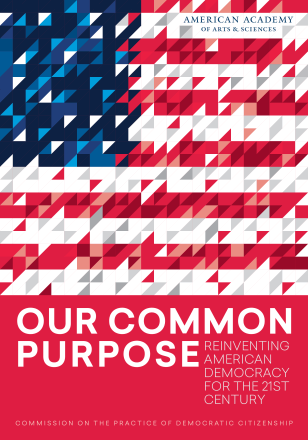
The American Academy of Arts and Sciences recommends citizen assemblies

In 2020 the American Academy of Arts and Sciences published the report of its Commission on the Practice of Democratic Citizenship.

The report is a useful example of how the liberal U.S. establishment views the state of the political system and for the kind of ideas it generates for institutional reforms. A set of self-appointed reformers, highly credentialed by the establishment, functions as the tribunes of the people. The report is ostensibly based on “listening sessions” held with various groups in the U.S., but of course the entire exercise is controlled from beginning to end by elite actors and it is completely up to the commission members to select the makeup of the groups “listened to” and to channel their “input” into the a set of recommendations. In fact, regarding the makeup of the groups in the “listening sessions”, the report specifically asserts that “[t]he intent of this strategy was not to collect a statistically representative sample, but to cast a wide net and surface the personal experiences, frustrations, and acts of engagement of a diverse array of Americans”.

The Commission on the Practice of Democratic Citizenship was established in the spring of 2018 at the initiative of then Academy President Jonathan Fanton and Stephen D. Bechtel, Jr., Chair of the S. D. Bechtel, Jr. Foundation. Mr. Bechtel challenged the Academy to consider what it means to be a good citizen in the twenty-first century, and to ask how all of us might obtain the values, knowledge, and skills to become still better citizens. Since 1780, projects that work to bolster American citizens’ understanding of and engagement with the institutions of their government have been a hallmark of the Academy’s work.

The background for the commission’s work is a grim picture of disintegration of social cohesion and distrust in institutions. As is standard practice, the real-world causes of this situation are left unclear. Abstract economic issues like inequality and mobility are mentioned, and it is asserted (citing Gilens and Page) that “[c]ongressional priorities, studies have shown, now align with the preferences of the most affluent”. However, real-life, specific outcomes of those “congressional priorities”, such as food insecurity, lack of medical care, indebtedness, declining life spans, or incarceration rates are not discussed.
Continue reading

Wallonia: A first citizen commission to discuss democracy

An article by Eric Deffet published in Belgian Le Soir on June 14th, 2023.

The Walloon parliament has approved the creation of a first deliberative commission with a mix of allotted citizens and elected officials. Creating a mirror-in-mirror situation, this commission will discuss… the creation of a permanent commission to serve alongside the legislature.

Several years after Brussels, Wallonia is getting ready to launch its own experimentation with a first deliberative commission mixing elected officials and allotted citizens. The legal framework has long existed and the green light for a real life test has been given on Wednesday in the assembly. It responds to demands for citizen participation and transparency following the revelations on the dysfunction of the regional parliament. The participants will be drawn from the National Register: 30 citizens and as many additional fill-ins, who will have to represent the Walloon population.
Continue reading

Citizens’ Climate Assembly in Westminster City

It is interesting to consider why allotted assemblies for discussing and making recommendations regarding climate policies, and in particular at the municipal level, are such a widespread phenomenon. The City of Westminster in London is about to hold one of those as well.

Westminster Citizens’ Climate Assembly

We are holding the Citizens’ Climate Assembly across June and July 2023 because we are committed to improving the representation of residents’ views in how we tackle the climate emergency.

50 Westminster residents will be selected at random to attend assembly sessions and address the following issue:

How can we overcome the main barriers to Westminster becoming a net zero city by 2040 together? How do we ensure this is delivered in the fairest way?

Members will attend four sessions between June and July 2023 to learn about climate issues, discuss them and make recommendations.

These recommendations will then be reported to the council and will inform an updated version of our Climate Emergency Action Plan.

Westminster informs those interested in participating that this is an invitation-only event:

If you haven’t receive a postal invitation you can’t apply to be an assembly member.

There are lots of other ways to be involved in opportunities across Westminster. Find out more about Our Westminster.

Keep up to date with the Citizens’ Climate Assembly by signing up to the Environment Newsletter and visiting this webpage which will be updated throughout the assembly process.

Random citizens’ panel to advise on German food policy

Julia Dahm writes in EURACTIV Germany about the decision by the German parliament to convene an allotted body to “bring the citizens’ perspective into the political debate” about food policy. Even at this early stage (the proposal was only adopted a few days ago), it seems all the expected elements of such a situation – familiar from the going-ons around the French Citizen Climate Convention, for example – are there: a government elected promising to act on a certain set of do-good principles, established powers pushing against any change, conservatives claiming that citizen assemblies are a sign of weakness and a shirking of authority, and the inevitable suspicions and accusation of manipulation by the organizers.

The German parliament has decided to launch a panel of randomly selected citizens set to advise lawmakers on food and nutrition policies, in an effort to help navigate the thorny issue of the state interfering in dietary choices.

The motion to set up a citizens’ panel on diets and nutrition had been tabled by the three government parties – the Social Democrats (SPD), the Greens, and the Liberals (FDP) – and was adopted by the Bundestag on Wednesday evening (10 May).

The first-ever citizens’ council put in place by the German parliament s set to “focus on the radical dietary changes that are already taking place in our day-to-day” and should “bring the citizens’ perspective into the political debate”.
Continue reading

Sortition Foundation answers criticism regarding the Herefordshire Climate Assembly

Tom Lord, the director of the Sortition Foundation, responds in a letter to the editor of the Hereford Times to an earlier letter to the editor claiming that the makeup of the Herefordshire Climate Assembly, whose members were selected by the Sortition Foundation, was biased.

This is how we chose Herefordshire Climate Assembly members

FRANK Myers raises concerns (Who are they? April 22) that participants in the Herefordshire Citizens’ Climate Assembly had preconceived ideas about climate change.

The reason that over 80 per cent of participants had preexisting concerns about climate change is simply because that reflects the broader population’s views at the time, according to national statistics gathered every three months.

This issue of the potential for some people to be more likely to sign up than others is exactly why we asked people about their existing opinion about climate change when registering.
Continue reading

Another Herefordshire citizen council letter to the editor

The Herefordshire citizen council for the climate has been the subject of a couple of critical letters to the editor of the Hereford Times last year. In a new letter, Frank Myers MBE from Ross-on-Wye is critical of the process as well, and in particular is unhappy about the fact that the identities of the members of the council are not made public.

Why won’t Herefordshire Council name Climate Assembly members?

LAST year a Citizen’s Climate Assembly was formed. Some 50 or so members were recruited and each were paid £300 for their participation.

The group was chosen, with the help of the infamous Sortition Foundation, in such a way that almost 90 per cent had preconceived concerns about climate change.

As we approach the local elections I think it is important to know how many of these people have put themselves forward for election for posts where they are paid nothing.

So I asked Herefordshire Council for their names and the council refused to disclose them.

So we are not allowed to know but Councillor Ellie Chowns, the leader of the Greens, who chaired the foundation proceedings, obviously knows their identity and has had the opportunity to share the Green message with them.

Is this democracy?

Beaudet: Let us push the frontiers of democracy

Thierry Beaudet is the President of the French Economic, Social and Environmental Council (CESE), the body which organized the French allotted bodies which discussed environmental policy and end-of-life policy. He has now published a book in which he advocates the use of sortition as a tool of democracy. The book is described by the publisher as follows:

The trappings of our democracy are falling apart: elections are no longer adequate for the task, and there is general distrust toward every authority and every power. Facing this crisis, new political practices assert themselves, practices which engage and refer to the citizen body. Citizen participation, still in its beginning in our country, must develop, through sortition, the exercising of collective deliberation, the systematic collaborative construction of public policy. Thierry Beaudet, the President of the Economic, Social and Environmental Council, proposes that we learn how to remake democracy and to discuss together substantive issues rather than keep rehashing divisions in a vacuum.