Dymond: Citizens’ assemblies, a choreographed charade

Gillian Dymond writes in The Conservative Woman:

AN article in the online publication Civil Service World last February announced that former civil servant Sue Gray is working with Labour on plans to introduce citizens’ assemblies should the party, as is likely, win the next election. These assemblies are very much in vogue, with recent examples having allegedly helped secure ‘yes’ votes for abortion and gay marriage in the Irish Republic. The less enthusiastic amongst us, however, might conclude that they are just another charade to be played out within the parameters of permitted debate, with a view to ensuring, in the words of Nick Cohen back in 1999, that ‘the public can only want what the public gets’.

Choice of subject matter is only one of the many ways in which citizens’ assemblies may be subverted and controlled.

How, for instance, are the questions put to participants chosen, and what are the implications of the wording in which they are framed?
Continue reading

Irish citizen assembly process terminates in rejection by referendum

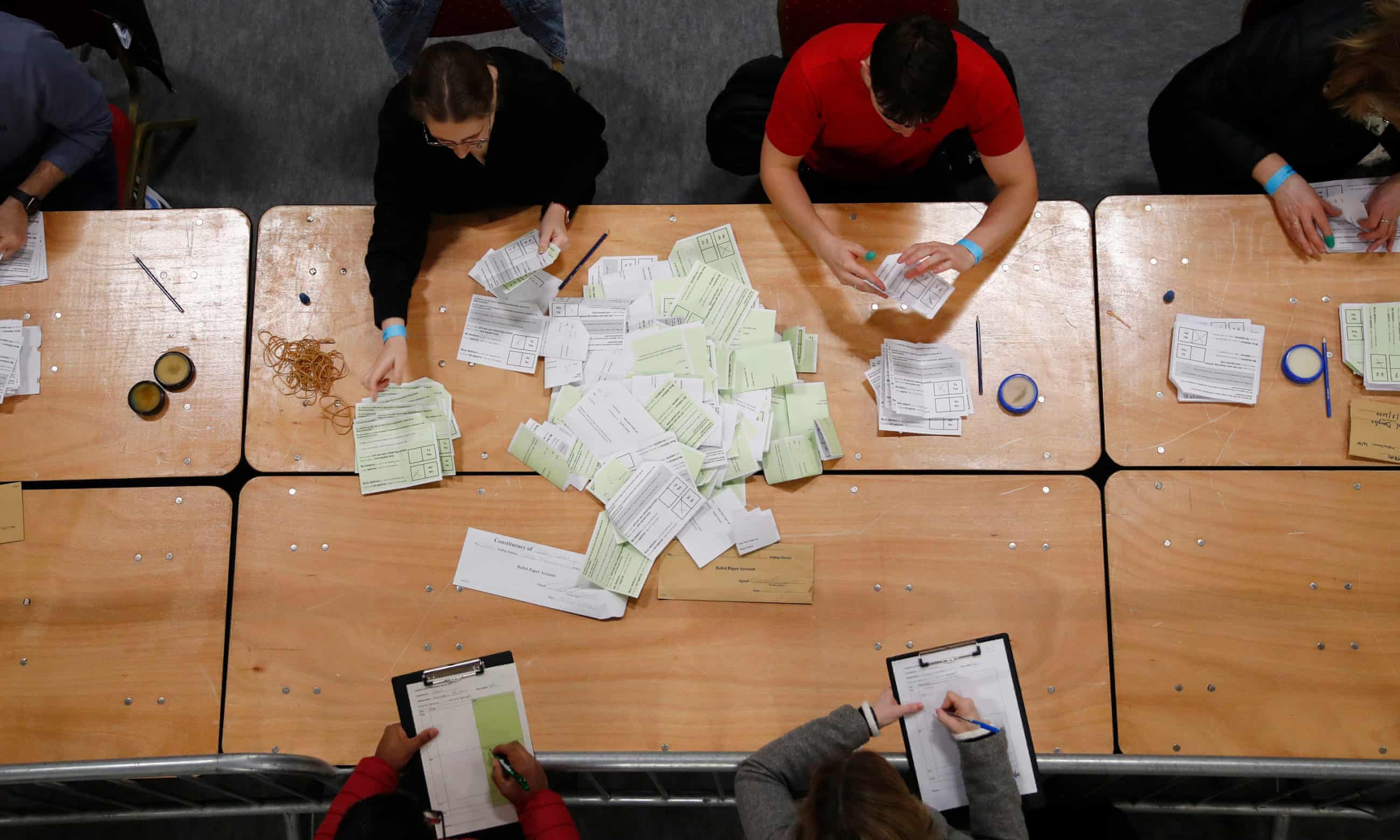
A referendum in Ireland on March 8 resulted in a “no” vote for constitutional changes. The rejected proposals were the product of a process involving an allotted citizen assembly. An article by Rory Carroll in the The Guardian offers an illuminating review of the aftermath of the failure of the proposed changes at the polls.

Irish referendum fiasco puts future of lauded citizens’ assemblies in doubt

Debates involving 99 randomly selected people were hailed as a model for the world, but some say faith has been eroded

When Ireland shattered its history of social conservatism by passing a 2015 referendum on same-sex marriage and a 2018 referendum on abortion, progressives credited its citizens’ assembly.

Ninety-nine randomly selected people, who are brought together to debate a specific issue, had weighed evidence from experts and issued policy recommendations that emboldened the political establishment, and voters, to make audacious leaps.

Governments and campaigners around the world hailed Ireland as a model for how to tackle divisive issues and a modern incarnation of the concept of deliberative democracy that dated back to ancient Athens.
Continue reading

Heiress is letting 50 strangers give her €25 million fortune away

Fortune tells the story of Marlene Engelhorn who is busy dispensing with €25 million which she inherited.

Engelhorn settled on an idea: Let 50 strangers decide how to give it away.

Those strangers, all of whom live in Engelhorn’s native Austria, will meet for the first time this weekend at a hotel in Salzburg. Dubbed the Guter Rat, or Good Council, they were chosen through a statistical process run by research group Foresight and range in location, age, race, socioeconomic background and other demographic factors chosen in an effort to be representative of the overall Austrian population.

Engelhorn’s goal is not only to give away €25 million, but also to spark conversations on wealth inequality. She’s frustrated that her windfall wasn’t taxed — Austria eliminated its inheritance tax in 2008 — and doesn’t see traditional philanthropy as a good solution because it still gives her too much power.

“I’m just one brain, I’m just one person and so to me, this is a huge relief knowing that the process of redistribution is much more legitimate and thorough and democratic than I could ever do it,” she said in an interview. “Nobody needs another foundation.”

Continue reading

European Citizens’ Energy Efficiency Panel

A three-weekend event convenes 150 allotted EU citizens in Brussels for discussing

how individuals, communities, the public and private sector and others can become more energy efficient in a way that makes the most impact on the climate, economy, jobs, health – and energy bills.

This event, which is billed as “putting citizens at the heart of European policymaking”, is an archetype for how citizen assemblies are being used as an exercise in public relations and a driver for meaningless governance process that serves to generate employment and status for a self-serving political, professional and academic elite. The notion that a body of 150 people can meaningfully generate independent ideas about energy management over 3 weekends is transparently absurd. This is even before questions about whether the purview of energy efficiency even makes sense and how any recommendations produced would be handled by the vast professional political apparatus.

No doubt, though, that events like this would then serve as grist for the citizen assemblies industry and would feed a self-congratulating rhetoric about how “increased involvement of citizen assemblies in our democracies” is leading to a renewal of democracy and is a way to address citizen alienation and cynicism. It is indeed a useful contribution to the money-raising operation of this fledgling industry and to the careers of the experts and academics associated with it.

Sortition in 2023

Equality-by-Lot’s traditional yearly review post.

In terms of interest in sortition, 2023 saw a continuation of the trend of previous years. Throughout 2023, there was a steady beat of activity around the world proposing or reporting the application of sortition in various ways for various purposes, along with a stream of condemnations and warnings against the idea.

This included some fairly high profile pieces, with the most notable one being an op-ed in the New York Times. Among the most high profile applications was the French End-of-Life panel. The head of the CESE, the institution that organized this body, proposed expanding the use of allotted bodies.

While the The academics continued their back-and-forth, sortition found a new fairly high-profile advocate in Martin Wolf, the chief economics commentator at the Financial Times, who was introduced to the idea by Nicholas Gruen.

An even more influential sortition advocate this year was Yanis Varoufakis, who put allotted citizen councils as a main component of his democratization agenda. His organization, DiEM25, created a deliberative democracy collective devoted to discussing this idea.

Two notable books dealing with sortition published this year were the late Maurice Pope’s The Keys to Democracy that was originally written in the 1980’s and Yves Sintomer’s The Government of Chance.

This activity indicates a level of interest that is generally comparable to that of the last couple of years. There is a persisting sense of recovery of the prevailing elections-based system from the crisis of 2016 which diminishes any immediate interest in sortition as a tool for contending with popular discontent. As long as there is no widespread unrest, it is likely that interest in sortition will continue to simmer. However, it is important that sortition activists continue to look for ways to spread awareness of the idea in the population so that when a new crisis does occur, sortition is a present viable alternative to the status quo. If it is not, then in all likelihood anti-democratic sentiments would gain ground as a result of popular frustration. Examples of such outcomes already appeared in 2023 in Argentina and the Netherlands.

Upcoming drawing of a Michigan redistricting commission member

The U.S. state of Michigan has an allotted redistricting commission. Following the resignation of Dustin Witjes, one of the commission’s four Democratic members, a replacement member is going to be allotted on January 3rd. The allotment is going to be live-streamed on the internet.

Following Witjes’ resignation on Wednesday, [state Rep. Ann] Bollin said it was long overdue.

“His prolonged absence from Michigan while collecting pay as a member of the redistricting commission is unacceptable. This situation has exemplified a lack of accountability and a disregard for the responsibilities tied to this crucial role,” she said.

With Witjes’ resignation, the Michigan Department of State will host a random selection at 3:30 p.m. Jan. 3 to choose a replacement.

The Michigan constitution requires new commissioners to be randomly selected from the remaining pool of semi-finalist applicants who affiliate with the same party as the departing commissioner.

“Of the 200 semi-finalists randomly selected in June 2020, there are 52 remaining who affiliate with the Democratic Party,” stated a release.

The drawing will be livestreamed on the MICRC’s social media accounts.

Random selection in funding art

Martin O’Leary, Studio Community Lead at Pervasive Media Studio, Watershed, writes in Arts Professional magazine.

An ancient practice of balloting is being put to use in application processes with the twin aims of reducing unpaid labour and increasing fairness

In the world of funding schemes, many organisations have experimented with random selection, led by the New Zealand Health Research Council in 2013. These experiments have been intended to increase the variety of work funded, by reducing the need to write ‘safe’ proposals. Organisations like the Swiss National Science Foundation, Innovate UK, the Nigerian government, and the Volkswagen Foundation, have all trialled random selection processes for funding science and innovation.

In the arts, there have been several schemes from large organisations like Jerwood Arts, as well as smaller, more DIY organisations like The Uncultured. Alongside aiming to increase the variety of projects funded, random selection is seen as a fairer way of distributing funding, which reduces the power differential between artists and funders.

Reducing unpaid labour

For the last year at Watershed in Bristol, we’ve been experimenting with random selection across a range of our programmes, as an alternative to more traditional selection processes for applicants. We were initially inspired by Jerwood Arts and their 1:1 Fund, in which they introduced randomness to increase the fairness of their application process. We’ve found the real benefit of the system comes in reducing the stress and unpaid labour demanded from applicants.

Before we introduced random selection, our annual winter residency programme typically received up to a hundred applications, competing for two or three places on the programme. Each of these applications included a written project proposal, which could take days to produce. By our estimates, adding up the total time spent across all applicants, we were asking for months of unpaid work — far more than the amount of funded time we offered to successful applicants.

In our new model, we ask applicants to complete a simple form to confirm their eligibility. Then we randomly select a pool of twelve applicants who form a shortlist for the residencies. Each of these applicants has time with our team to discuss their idea, after which they write up a full proposal and have a more formal interview. Because of the limited numbers, we’re able to pay a small stipend to everyone on the shortlist to cover their time preparing the full proposal.

Three models: total, early, late

When we talk about random selection, people often assume we’re giving out residencies entirely at random, removing ourselves completely from the process. This is a version of the process that we call ‘total’ random selection. It’s the simplest way of doing things, and it has real advantages in terms of speed and transparency. However, it’s a difficult process to control, and may lead to undesirable outcomes.
Continue reading

Sortition in Tunisia

Jeune Afrique discusses the mechanism for selecting the members of a newly created second chamber of the Tunisian parliament. There are various details that are not quite clear to me, but the mechanism apparently involves sortition and the creation of arbitrary districts combining interior and coastal areas, an idea which echos the reforms of Cleisthenes.

In Tunisia, a new system, new electoral districting

Announced at the end of September, the new partitioning includes new areas and districts whose representatives will seat at the second chamber of Parliament, created in May 2022. But the logic of the repartitioning, including that of the geography, is perplexing.

Decree 589 of September 21st, 2023 is significant: it sets a configuration which corresponds to the old idea of connecting interior regions with coastal ones.

[These districts will be used] to create the National Council of Regions and Districts, the second chamber of Parliament.

The 72 representatives of the Council will be appointed using a complex method which involves voting and sortition, with each stage structuring the different levels of regional representation.

London borough to hold a citizens assembly to scrutinize the police

Stories in the Waltham Forest Echo and the Evening Standard.

Waltham Forest announces citizens assembly to scrutinise Met Police

The assembly, the first of its kind in the country, comes as Waltham Forest has the lowest trust in the Metropolitan Police out of any London borough

A citizens’ assembly scrutinising police officers in Waltham Forest will be held in the Spring.

The move has been described by Waltham Forest Council as the first time a local authority in the UK has held such an assembly.

The goal of the assembly will be to hear local people’s views on how policing can better reflect Baroness Casey’s report on the Metropolitan Police. The March report found the police to be “institutionally racist, sexist, homophobic”.

The council says the assembly makeup will aim to reflect the population of Waltham Forest in terms of age, gender, ethnicity, whether or not they have a disability, and where in the borough they live.
Continue reading

Santa Monica, CA: Allotted panel to guide airport’s future

A report in the Santa Monica Lookout:

Randomly Chosen Panel Should Guide Airport’s Future, Officials Say

By Jorge Casuso

September 25, 2023 — The future of Santa Monica Airport should be hammered out — not by the usual community activists and civic volunteers — but by randomly selected “everyday people,” City officials told the City Council Monday.

The information item from top Public Works officials proposes using a democratic lottery to “engage new residents through a randomized selection process,” instead of relying on “the same self-selected individuals.”

After meeting in person for six weekends over the course of some nine months starting next fall, the panel would make recommendations to the Council for the 227-acre site that under a 2017 agreement with the FAA would cease to operate as an airport at the end of 2028.

The panel will be charged with what City officials have said “is likely to be the most transformative urban planning event of the century for the City”.

The lottery system — which is not common in North America — “would result in a panel that demands broad demographic representation, and minimizes the influence of special interests,” said the report from Public Works Director Rick Valte.

Previous long-range planning efforts by the City have “suffered tremendous opposition from vocal community members whose resistance to key elements of each plan — or even the entire plan itself — resulted in protracted land use battles,” the report said.
Continue reading