Hugh Pope on the Belgian Citizens’ Dialogue

Hugh Pope has a piece in the The New European about the permanent allotted body in the German speaking community in Belgium.

If we are trying to fix our “broken politics”, is the solution really just another set of politicians? If the electoral system is at fault, might the process of government work better if it were run by a group of randomly selected citizens?

Liesa Scholzen is a politician whose constituents are the 70,000 German speakers on Belgium’s eastern border. People with an interest in new political systems are paying close attention to Scholzen’s hilltop parliament in Eupen, Ostbelgien. That’s because in 2021, as part of its Citizens’ Dialogue initiative, Ostbelgien inaugurated the world’s first official, permanent legislative body chosen not by votes, but by lottery.

“The Citizens’ Dialogue” […] is led by a standing council of citizens, drawn by lot. The 24-member council serves for 18 months, and they choose the topics which are then debated by separate Citizens’ Assemblies. These assemblies have 25-50 members, also chosen by lot, who make their recommendations following two to three days of deliberation. Members meet in the evening or at weekends, and receive expenses plus €50 to €95 (£44-£84) per session. All participants are chosen from the German-speaking community.

An interesting paragraph discusses the matter of the rate of acceptance:

[O]nly 5% to 10% of invitations to attend Citizens’ Assemblies are initially accepted. This is because people have no knowledge of them, no time to spare or just think the invitation letters are a hoax. Organisers usually ensure that those who do volunteer are representative through “stratification”, a second layer of random selection that balances gender, language, age, education and other criteria. But [activist Juliane] Baruck from Es geht LOS [a German organization promoting sortition] goes out knocking on the doors of those who don’t respond. “We trust the lottery to get a truly representative sample, so we keep trying,” she said. “I don’t try to convince those chosen. I ask them: ‘What do you need to join in?’ Already, we’ve got the positive response rate up to 22%.”

Continue reading

Bailly: The democratic quality of European Citizens’ panels

“The democratic quality of European Citizens’ panels” is an interesting study of the citizen panels convened within the framework of the Conference on the Future of Europe which took place in 2021. The study by Jessy Bailly involved interviews with dozens of participants in the panels.

The study highlights some of the problems of the lack of an acceptable design, resulting in biased outcomes. Examples of problematic aspects of the design are the use of volunteers, the way the experts are appointed, the overrepresentation of a stratum of their choice (youth in this case), and the lack of transparency of the sortition method.

Some excerpts:

When I surveyed the citizens, many praised the “diversity of people” within the panels. Others emphasised the lack of representativeness of the citizens’ panels, with at least 5 of the 31 citizens interviewed insisting on it. One of them was a German citizen in her 30s: “You should pay attention to a greater diversity of people and not only people who are pro-Europe. There should be a greater selection of different people, different social classes and also religions.” It is worth noting that the “social class” criterion had to be respected (through the prism of occupation). However, no ethnic or religious criteria were considered.

Continue reading

Oligarchical intents

A piece by Eva Talmadge in The Guardian presents its audience with idea of sortition. To what extent such an article covers new ground for the reader would be interesting to try and find out. The article itself links to a 2018 Guardian article proposing a Brexit citizen assembly.

The article quotes some of the usual sortition suspects – Claudia Chwalisz, Peter MacLeod, and Peter Stone, and presents the standard deliberative rhetoric around citizen assemblies about how people are more informed and reasonable when they deliberate and about the potential of citizen assemblies “to help fractured societies not only work on complicated problems, but learn how to live with one another”.

Sandwiched in, however, Chwalisz does contribute a quite subversive idea:

As the ancient Greeks and others recognized, elections are a way of constituting an oligarchy. When the French and American revolutions led to the establishment of the institutions that today we call democratic, the word ‘democracy’ was never used – the intent was for them to be oligarchic, concentrating power in the hands of the few.

Continue reading

Martin Wolf on Democratic Capitalism (and me as it turns out!)

Martin Wolf is talking up a storm on the crisis of democratic capitalism, and he’s supporting sortition as you can hear from around 11 minutes in where I’ve set it up to begin.

In case you’re interested, here’s the presentation he gave before the panel session recorded above.

Hugh Pope reports on the French citizens’ assembly on assisted dying

Hugh Pope writes in buergerrat.de on his impressions of the French citizens’ assembly on assisted dying. Below are some excerpts from the piece, with a few of my comments.

On 9 December, France embarked on [an attempt] to find answers to fraught questions around its ban on assisted suicide. As the centre of a national debate on the issue, it convened 185 people, randomly selected from all over the country and its overseas territories, to research, discuss and propose answers to the question: “Is the framework for end-of-life support suited to all situations or should changes be introduced?”

The assembly will convene for nine 3-day weekends over 4 months.

“You are here in a place in which new forms of democracy are being invented and developed … and of them the Citizen Convention is without doubt the most ambitious, the most demanding and the most engaging,” participants were told by [the president of CESE, the convening body], Thierry Beaudet. “It’s impossible to do this [deliberation] on the scale of a country, so you’re going to do it for us, for the whole of society … This is the basis of both your legitimacy and our trust in you.”

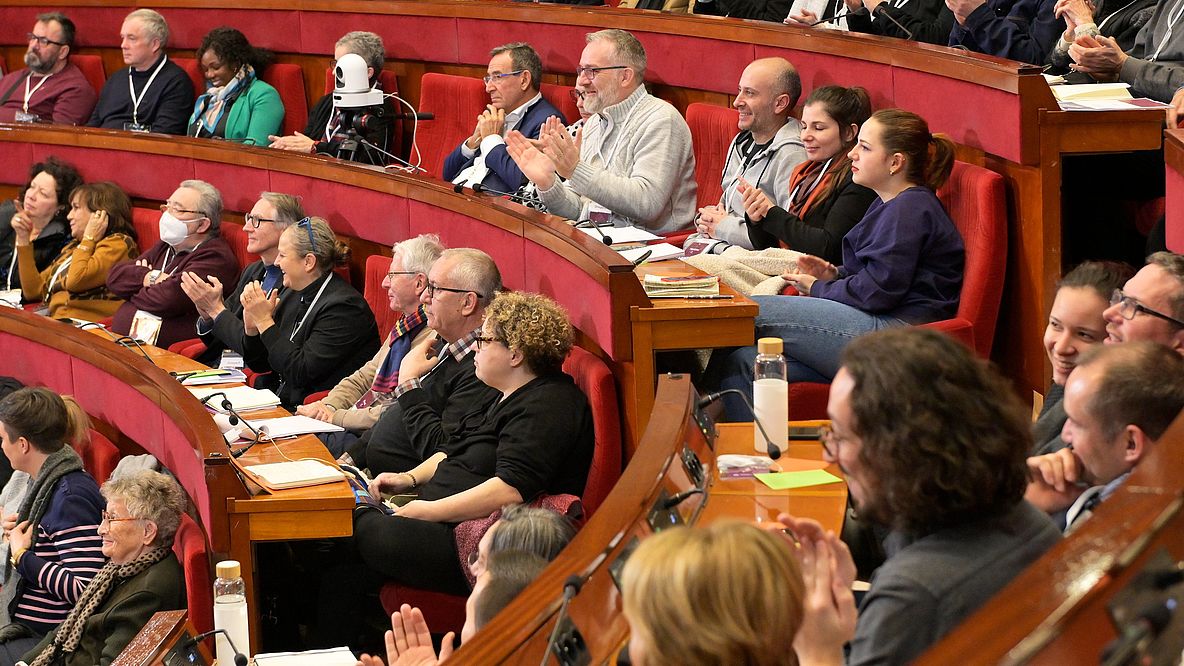
The randomly selected audience hardly looked revolutionary. Participants had only some of the youth and diversity of, say, the crowds travelling in the nearby Paris metro; they also had very few of the confident smiles and neat, conservative clothes that are the hallmark of elected politicians. At the same time, every element of society and France’s geography seemed present: a cheese farmer from the Alps, a professor of Greek and a retired teacher from Lille were joined by an immigrant from Niger, people of Algerian and Moroccan heritage and women in Muslim headscarves.

True mirror of a country’s whole population

It was unique to see a true mirror of a country’s whole population in one place: France came across as predominantly middle-aged, paler-skinned, polite, attentive and – after some initial shyness – articulate, collaborative and ready to challenge authority.
Continue reading

Sortition in 2022

Equality-by-Lot’s traditional yearly review post.

The most significant piece of sortition-related news for 2021 had been, in my view, the finding that over a quarter of public in four Western European countries – the UK, France, Italy and Germany – supports using allotted bodies to systematically complement the work of parliament. This year, the most significant piece of sortition-related news was the findings of a wider-coverage poll, this time conducted in 15 Western European countries. According to this poll, in all those countries there is fairly strong popular support (~4 in a scale of 0 to 10 on average) for having “a group of randomly-selected citizens make decisions instead of politicians”.

But while popular support for sortition is strong, and while (well justified) concern in elite circles about the declining popularity of the elections-based system persists, it seems to me that 2022 has continued a down-trend in interest in sortition in elite circles, a down-trend that indicates a recovery from the heights of establishment hysteria about the “Crisis of Democracy” following Brexit, the election of Donald Trump and the Gilets Jaunes protest in France. Academics have continued publishing papers and opinions on the pros and cons of sortition (unfortunately often rehashing very well hashed material) but applications of sortition have been fading in prominence since the zenith of the French Citizen Convention for the Climate, and discussion of the idea in mass media has receded as well.

That said, there were certainly many notable pieces of news and opinion written about sortition over the last year. Pieces advocating for sortition and discussions of the subject that were mentioned this year on Equality-by-Lot included items from South Africa, the UK: 1, 2, the US: 1, 2 3, 4, 5, 6, Australia, Malaysia, Texas, US, France, Ireland, Utah, US, California, US, Pakistan, Pennsylvania, US, and Massachusetts, US.

Also this year, an allotted council on climate change in Herefordshire, UK generated a discussion about its cost as well as other aspects. A fairly prominent Australia politician,
Vicotr Kline, wrote a strident article advocating replacing elections with sortition, and an independent candidate for governor of Minnesota, US ran on a sortition-based platform. In the city of Petaluma, California, an allotted Citizens’ Assembly was convened to determine how to use a piece of public property, an assembly to discuss food policy was set up in Switzerland, and in the province of Trento, Italy, a bill was discussed for constituting a citizen assembly for reviewing municipal regulations.

Finally, this year saw the passing of citizen assembly pioneer, Ned Crosby.

Authoritarians do sortition just like we do but very differently

SWI swissinfo.ch interviews Su Yun Woo, who is studying processes for citizen participation in decision making in China. Somewhat confusingly, the interview seems to be asserting two conflicting claims. On the one hand it is pointed out that the “citizen participation” processes in China are essentially the same as those in the West and have the same objectives. At the same time it is explaining that, obviously, things in “democracies” are very different as the authoritarian regimes lack “any overarching democratic conviction”.

SWI: How do these participatory budgeting processes [in China] work?

S.Y.W.: The authorities invite the local population to get involved in decision-making on a part of the budget. A group of citizens will come together to form a panel to discuss how to spend money on a project that serves the community – for instance, a library or a communal garden. Wenling’s participatory budget is well known, whereas the example of Chengdu has been less well studied.

In Wenling, citizens are selected through a lottery system. In Chengdu, the participants are volunteers. This explains why mainly older people took part there, since they have more time. In Wenling, random selection works as the participants get paid – just as they do in Switzerland for projects of this kind. They receive the equivalent of CHF7 ($7) and a free lunch for taking part. In Wenling, participatory processes are now an integral part of local budget policy-making.

SWI: So the participants do not have to be Communist Party members?

S.Y.W.: No, they are ordinary citizens. There is no denying, however, that there can be official interference in participatory projects. I was told about some party officials who were supposed to go door to door and ask people their opinions, but instead they just filled out the forms themselves.

SWI: How would you describe the discussion culture during participatory budget debates?

S.Y.W.: Some participants are very vocal in expressing their opinions, while others stay quiet and prefer to take a back seat.

SWI: This sounds rather like participatory budgeting elsewhere.
Continue reading

Using Lottery Prizes to Incentivise Covid Vaccine Take-Up

According to the article “Mastering the art of persuasion during a pandemic” in the journal Nature (OUTLOOK, 26 October 2022):

After the first COVID-19 vaccines were rolled out in the United States, local and state officials invested millions in the idea that waving money at people would convince them to get the jabs. Leaders tried straight cash incentives, whereby people collected a set sum for getting vaccinated, as well as lotteries, in which vaccinated people were entered into a draw to win a cash prize.

But the concept often flopped. One study (3) that gauged the effectiveness of vaccine lotteries found that vaccination rates were not significantly higher in lottery states than in non-lottery ones. Guaranteed cash payouts were somewhat more likely to encourage vaccination, a meta-analysis showed (4). Still, the evidence on incentive-based persuasion “is pretty disheartening in general”, Milkman says.

She is now studying a twist on the lottery strategy that might deliver more value for money — a regret lottery. This involves telling people that their name has been entered into a draw to win a large amount of money, but if their name is pulled from the hat and they have not been vaccinated then they will have to decline the reward. When Milkman and her team tried this in Philadelphia (5), vaccine rates in the area increased slightly compared with those in other, similar areas that did not have a regret lottery. “The one data point we have looks promising,” Milkman says, but further research is needed to confirm the finding.

References from the original:

(3) Law, A. C. et al. JAMA Intern Med. 182, 235–237 (2022).

(4) Brewer, N. T. et al. Lancet Reg. Health Am. 8, 100205 (2022).

(5) Milkman, K. L. et al. Nature Hum. Behav. https://doi.org/10.1038/s41562-022-01437-0 (2022).

Making research funding a lottery could help tackle ‘status bias’

Interesting article in the Financial Times.

The system of peer review tends to favour established names and institutions

By Anjana Ahujaa. The writer is a science commentator.

Star names wield an outsize influence over research, as well as in sport and entertainment. A recent analysis revealed that a research paper written jointly by a Nobel laureate and a novice was rejected by 65 per cent of reviewers when only the novice’s name was made visible as the corresponding author — but by just 23 per cent if the laureate’s name was used instead.

One might argue that “status bias”, also called the Matthew effect, makes for a reasonable short-cut in decision-making, given that prizes are one benchmark of quality.

But findings like these chime with persistent concerns that established names and institutions are unfairly crowding out newer research talent when it comes to publishing papers and winning grants. Now, two UK funding agencies, the British Academy and the Natural Environment Research Council, will try to counter that bias by awarding some of their research grants by lottery.
Continue reading

DemocracyNext

Update: demnext.org now has a video of the launch event. There is also a link to an article by Hélène Landemore and Claudia Chwalisz offering sortition as an alternative to the way that the failed Chilean constitutional proposal was generated (and a tweet-thread with a summary in English.)

DemocracyNext is a new organization featuring a “Who’s Who” of the sortition circles. DemocracyNext‘s press release announcing its launch is here. Some excerpts:

DemocracyNext, a new non-profit, non-partisan research and action institute, which announces its foundation this International Democracy Day, 15 September 2022 – aims to actively help this new democratic paradigm take shape and take hold.

“We believe that another democratic future is possible. We want to design and build new institutions where citizens can hold real decision making power,” said Claudia Chwalisz, chief executive of DemocracyNext. “Our point of departure is that the current electoral system is broken beyond repair. An entirely new framework must be based on full participation, citizen representation by lot, and real deliberation.”
Continue reading